Cute Animal Alphabet Sublimation Clipart: A Designer's Playful Toolkit
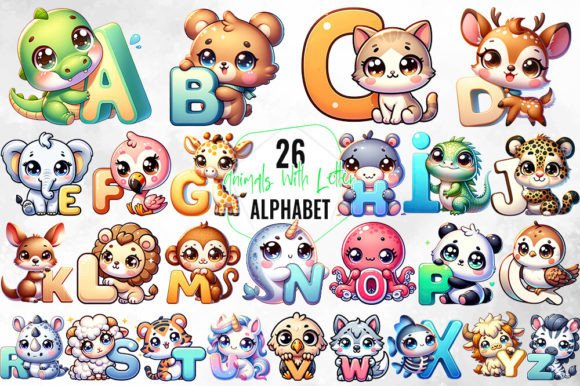
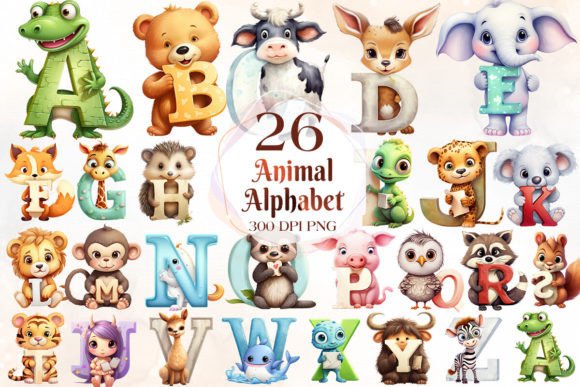
There's a particular kind of creative asset that doesn't just fill a space on your hard drive—it genuinely makes you want to start a project right away. That's the feeling you get when you open the Cute Animal Alphabet Sublimation Clipart collection. Each of the 26 PNG files pairs a letter with an adorable, character-driven animal illustration, rendered in a style that balances childlike warmth with enough polish to work in professional contexts. The line work is clean, the colors are vibrant yet controlled, and every single creature has a distinct personality that comes through even at thumbnail size.
What sets this clipart apart from generic alphabet sets is its intentionality. These aren't just letters stamped next to animals. The compositions feel designed—each animal interacts with its corresponding letter in a way that creates visual storytelling. A koala might cling to the curve of a "K," or a narwhal might arc gracefully through an "N." That kind of thoughtful integration makes these assets feel premium rather than template-driven, and it's exactly why they work across so many different project types.
Where This Clipart Truly Shines
Let's talk applications, because this is where the real value lives for anyone running a small business, managing a brand, or simply creating for the joy of it. The Cute Animal Alphabet Sublimation Clipart files are delivered at 3000 x 3000 pixels and 300 DPI, which means they're built for physical production from the ground up. Sublimation printing, direct-to-garment, vinyl transfers, screen printing prep—these files hold up. You're not going to get pixelation or muddy edges when you press them onto a polyester shirt or fire them through a sublimation printer onto a ceramic mug.
For entrepreneurs running Etsy shops or small e-commerce stores, this collection is genuinely useful. Think about personalized children's items: name banners for nurseries, custom birthday shirts, monogrammed tote bags. Parents love this kind of product, and the animal theme gives each letter enough visual interest that even a single initial makes a complete, giftable design. You don't need to add much—maybe a name in a complementary sans serif font below the clipart, and you have a finished product.
Beyond physical goods, these assets translate well into digital design work. Bloggers and content creators can use individual letters as decorative drop caps in children's content, educational posts, or family-oriented brand materials. Social media managers for daycare centers, pediatric offices, toy brands, or children's book authors will find these useful for creating engaging social media graphics that stop the scroll. The charm factor is high, and that emotional response—warmth, nostalgia, delight—is exactly what drives engagement in those niches.
Working With the Files: Practical Considerations
Each file comes as a standalone PNG with a transparent background, which gives you flexibility in layering. You can drop these onto patterned backgrounds, solid colors, or photographic textures without worrying about awkward white boxes or masking issues. That transparency is essential for sublimation work specifically, where background bleed-through can ruin an entire press run.
Resolution matters here, and it's worth emphasizing: 300 DPI at 3000 pixels means you can scale these down confidently for stickers or scale up for medium-format prints without quality loss. For very large-format applications like wall decals or banners, you might need to do some testing, but for the vast majority of product categories—cups, hats, shirts, stickers, notebooks, phone cases—these dimensions are more than sufficient.
One thing I'd recommend is building a small reference sheet before you start producing. Lay out all 26 letters side by side at the size you plan to use most often. This helps you check visual consistency across the set and identify any letters where the animal illustration might compete with text you're layering on top. In most cases, the designs are balanced well, but it's good practice—especially if you're creating a product line where customers expect uniformity.
Pairing and Brand Strategy
When you're incorporating Cute Animal Alphabet Sublimation Clipart into a broader brand identity or product line, font pairing becomes important. These illustrations have a rounded, friendly aesthetic, so they naturally complement modern typography that leans warm and approachable. A clean handwritten font works beautifully for names or messages beneath the clipart. Alternatively, a rounded sans serif font maintains that approachable feel while adding a touch of structure.
Avoid pairing these with overly formal serif fonts or aggressive, angular typefaces—the visual language just doesn't align. If you're building a children's brand, consistency between your clipart style and your typographic choices reinforces recognition. Customers start to associate that cohesive look with your shop or your content, and that's where real brand identity takes root.
For designers working with clients, this collection is a smart addition to your design assets library. Having a reliable, high-quality alphabet set on hand means you can pitch children's product concepts, educational materials, or family-oriented branding projects without starting from scratch. It speeds up your workflow and lets you present polished mockups early in the creative process, which clients appreciate.
Licensing and Commercial Use
The files are offered for both personal and commercial use, which opens the door for small business owners to create and sell finished products directly. That said, always review the specific license terms included with your purchase. Understand whether there are restrictions on print-on-demand platforms, digital resale, or mass production quantities. Responsible licensing practices protect both you and the original creator, and they're a hallmark of running a professional operation.
Ultimately, Cute Animal Alphabet Sublimation Clipart is one of those resources that earns its place in a creative toolkit not because it's flashy, but because it's reliably useful. It solves real production problems, appeals to real audiences, and gives you enough creative flexibility to make each project feel distinctly yours. Whether you're pressing your first mug or managing a catalog of hundreds of products, having assets you can trust at the production level is worth more than any theoretical design principle.